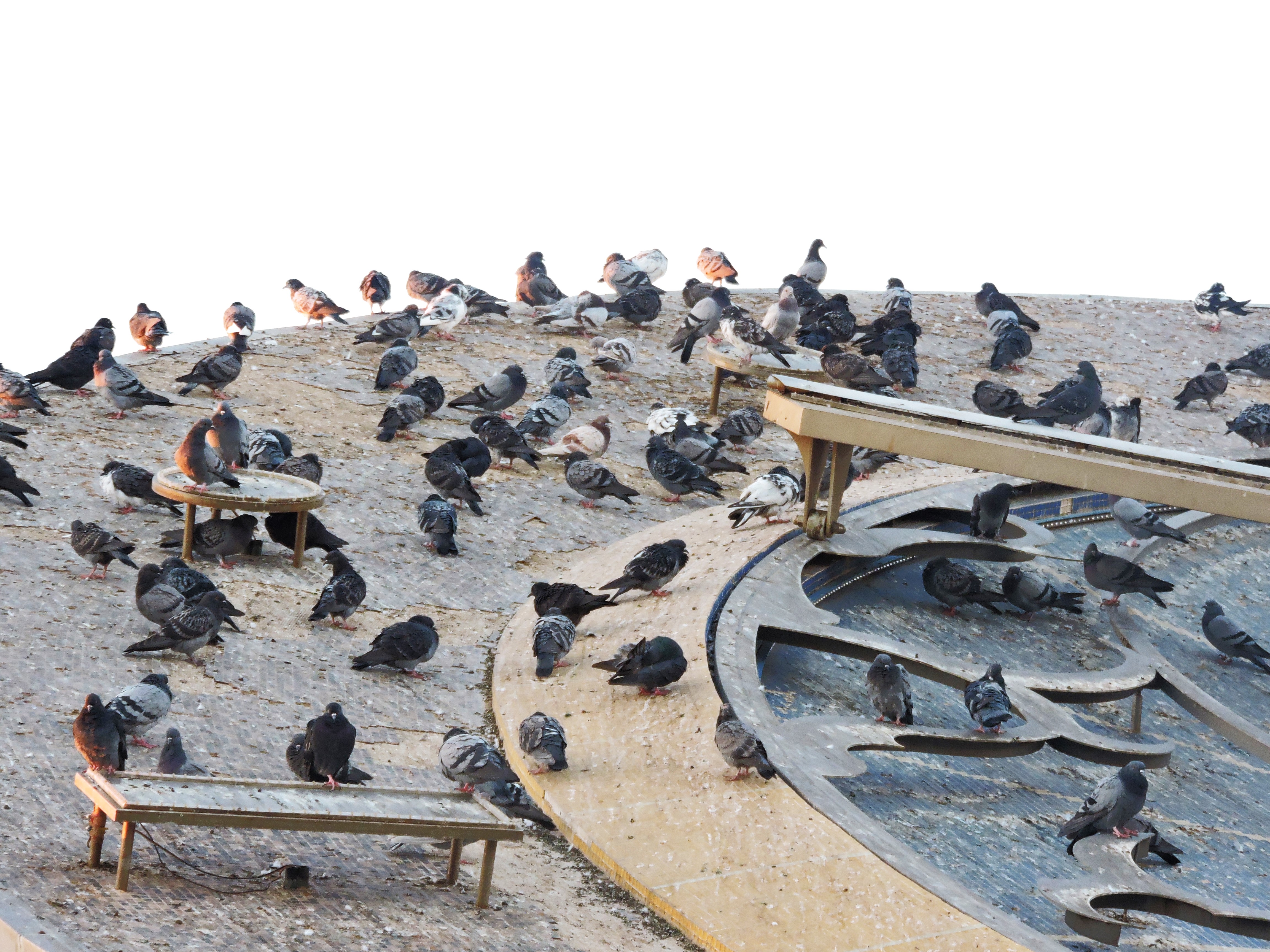
Across inherited disciplines, scholars increasingly propose that human beings can no longer be studied in isolation from the myriad nonhuman others who share the planet with us. Informed at once by indigenous studies and knowledges, posthuman and ecofeminist philosophy as well as multispecies ethnography and critical animal studies, much contemporary scholarship demonstrates that ‘human’ beings come into existence, evolve, live and die in intimate relation to other forms of life. Like ‘us’, our embodied, ecological ‘others’ (also: kin) – increasingly understood as social, historical, poetic and spiritual actors themselves – also live and die with/in regimes of power and knowledge that require and naturalize the death of many for the benefit of some. As some ‘humans’ call for recognition of shared ‘animal’ and sensual embodiment across life-forms, visions of ‘animality’ and proliferating techniques of ‘dehumanization’ continue to underwrite violence, racism, colonialism and genocide across our planet. What does it mean to seek justice-centred ‘more-than-human’ worlds, support transspecies flourishing that includes all humans, or work toward antispecies ways of being-doing in times of devastation?
During the first ten weeks of this Division 2 projects course, we focus on contemporary, primarily full-length, works that ask what it is to live ‘in relation’ – to be multiple, vulnerable to others, and seek to affirm life in contexts of high capitalism, forced migration, colonialism, and diverse kinds of ‘ruins.’ We will also watch several films together. The last third of the semester will function as a ‘laboratory’ for individual projects, which may take any form. Students will work in research groups, sharing ideas and work in progress, reports on individual readings, and preparing final presentations.
Keywords: posthuman, multispecies, critical animal, ethnography, anthropology, colonialism.
This course addresses the Race and Power requirement.
A POEM: Against génocidaires
Say: Bear People taught Human People how to live with mountains. Say: Without whales we’re not human. Say: Toucan is the spirit of our breath. Hear: Only humans have a soul. Hear: Animals have no feeling. Hear: Those people are animals. See: The killing of animals calls for celebration or it is a duty. Say: In the camp, only the stray dog remembered we were human. Say: He fed cats when he had nothing. Say: All life is life and life wants life to live.
Know: Without camels no poetry is written, without worms no time. Know: Every donkey laughs. Listen: And they too shall be gathered to their Lord. Listen: And we too are made of honey. Say: Praise to our beloved ancestors the rabbits and the bees!
COURSE OBJECTIVES
The primary goal of this course is to prepare students in Division 2 to carry out a full-year independent project in Division 3.
Students will devise, plan, and complete an independent project in a form of their choosing. They will practice finding and reporting on appropriate scholarly sources, creating a full annotated bibliography to accompany their project. They will create and follow a research schedule, regularly reflecting on their progress. They will share work-in-progress with peers, and at semester's end, present their project to the class.
OUR COMMITMENTS
• Our work depends on each of us belonging here together.
• We listen to, support and en-courage each other.
• We reflect on the quality of our contributions and identify what would help us to do better.
• Only someone who wants your success will tell you what you’re doing wrong.
• We centre marginalized voices in our classroom and our research and work to amplify them.
• We acknowledge the white supremacist colonial and genocidal histories and practices that continue to shape the academy and we resolve to work against them.
• The privileged among us take responsibility for stepping back and holding space for others.
• We communicate our needs and humbly work to meet the needs of others.
• We come to class prepared. When we cannot be prepared, we still come to class!
If you have or require accommodations, please communicate with me. I am committed to working with you. If you are not registered with OARS, please do register. Know that I will do it with you if you like.
ATTENDANCE
Be here. This class will not work without you. Your thinking, contributions, and projects matter. If you miss more than two classes, you will not receive an evaluation for this course. This class is the equivalent of TWO shorter meetings. When you miss one meeting you are missing the equivalent of TWO shorter meetings. If you miss more than two of our weekly meetings (the equivalent of FOUR short meetings), you will not receive an evaluation for this course.
ARTIFICIAL INTELLIGENCE
Artificial Intelligence is designed to stop you from thinking. The more you use it, the less able you are to think for yourself or express yourself in a way that reflects your own mind, creativity and spirit. Artificial Intelligence is racist, imperialist, colonialist and fascist. It is destroying the university. It is also destroying our planet, which, particularly given the topic of our course, you should especially care about. The assignments foro this class require you to use your own voice and express yourself in your own words and/or visual/aural forms. Part of learning, of becoming better scholars/writers/artists, is struggling to understand our own thoughts and share them with others. I am committed to hearing and reading you as you are. In uncertainty and the half-thought there is always something interesting and meaningful. The use of Artificial Intelligence in any capacity, whether to summarize my emails to you, this syllabus, or any reading for this class, or to generate text and ideas, structure your work, edit writing that you have produced, or perform any other task, is not permitted. All work submitted electronically or presented to the class must be prefaced by a true statement indicating that you have not used AI. If I think that you have used AI for any assignment, I may require you to redo the work by hand in my office.
THE WORK
*All work must be submitted or done in our class folder, which is on Google.
See instructions for how to use your 'member folder'.
Weekly: In-class writing; Passages and Notes; Entry in Collaborative Document.
Weeks 2-9: Chapter presentations.
March 23rd: Project proposal draft due – 500-100 words.
March 30st: Full bibliography due.
April 13th: First pair of annotation due.
April 14th: Second pair of annotations due.
April 28th or May 5th: Presentation.
May 12th: Final Projects and Reflexive Essay, including reflection on race and power in our readings and in your work for this course.
During the first ten weeks of this Division 2 projects course, we focus on contemporary, primarily full-length, works that ask what it is to live ‘in relation’ – to be multiple, vulnerable to others, and seek to affirm life in contexts of high capitalism, forced migration, colonialism, and diverse kinds of ‘ruins.’ We will also watch several films together. The last third of the semester will function as a ‘laboratory’ for individual projects, which may take any form. Students will work in research groups, sharing ideas and work in progress, reports on individual readings, and preparing final presentations.
Keywords: posthuman, multispecies, critical animal, ethnography, anthropology, colonialism.
This course addresses the Race and Power requirement.
A POEM: Against génocidaires
Say: Bear People taught Human People how to live with mountains. Say: Without whales we’re not human. Say: Toucan is the spirit of our breath. Hear: Only humans have a soul. Hear: Animals have no feeling. Hear: Those people are animals. See: The killing of animals calls for celebration or it is a duty. Say: In the camp, only the stray dog remembered we were human. Say: He fed cats when he had nothing. Say: All life is life and life wants life to live.
Know: Without camels no poetry is written, without worms no time. Know: Every donkey laughs. Listen: And they too shall be gathered to their Lord. Listen: And we too are made of honey. Say: Praise to our beloved ancestors the rabbits and the bees!
COURSE OBJECTIVES
The primary goal of this course is to prepare students in Division 2 to carry out a full-year independent project in Division 3.
Students will devise, plan, and complete an independent project in a form of their choosing. They will practice finding and reporting on appropriate scholarly sources, creating a full annotated bibliography to accompany their project. They will create and follow a research schedule, regularly reflecting on their progress. They will share work-in-progress with peers, and at semester's end, present their project to the class.
OUR COMMITMENTS
• Our work depends on each of us belonging here together.
• We listen to, support and en-courage each other.
• We reflect on the quality of our contributions and identify what would help us to do better.
• Only someone who wants your success will tell you what you’re doing wrong.
• We centre marginalized voices in our classroom and our research and work to amplify them.
• We acknowledge the white supremacist colonial and genocidal histories and practices that continue to shape the academy and we resolve to work against them.
• The privileged among us take responsibility for stepping back and holding space for others.
• We communicate our needs and humbly work to meet the needs of others.
• We come to class prepared. When we cannot be prepared, we still come to class!
If you have or require accommodations, please communicate with me. I am committed to working with you. If you are not registered with OARS, please do register. Know that I will do it with you if you like.
ATTENDANCE
Be here. This class will not work without you. Your thinking, contributions, and projects matter. If you miss more than two classes, you will not receive an evaluation for this course. This class is the equivalent of TWO shorter meetings. When you miss one meeting you are missing the equivalent of TWO shorter meetings. If you miss more than two of our weekly meetings (the equivalent of FOUR short meetings), you will not receive an evaluation for this course.
ARTIFICIAL INTELLIGENCE
Artificial Intelligence is designed to stop you from thinking. The more you use it, the less able you are to think for yourself or express yourself in a way that reflects your own mind, creativity and spirit. Artificial Intelligence is racist, imperialist, colonialist and fascist. It is destroying the university. It is also destroying our planet, which, particularly given the topic of our course, you should especially care about. The assignments foro this class require you to use your own voice and express yourself in your own words and/or visual/aural forms. Part of learning, of becoming better scholars/writers/artists, is struggling to understand our own thoughts and share them with others. I am committed to hearing and reading you as you are. In uncertainty and the half-thought there is always something interesting and meaningful. The use of Artificial Intelligence in any capacity, whether to summarize my emails to you, this syllabus, or any reading for this class, or to generate text and ideas, structure your work, edit writing that you have produced, or perform any other task, is not permitted. All work submitted electronically or presented to the class must be prefaced by a true statement indicating that you have not used AI. If I think that you have used AI for any assignment, I may require you to redo the work by hand in my office.
THE WORK
*All work must be submitted or done in our class folder, which is on Google.
See instructions for how to use your 'member folder'.
Weekly: In-class writing; Passages and Notes; Entry in Collaborative Document.
Weeks 2-9: Chapter presentations.
March 23rd: Project proposal draft due – 500-100 words.
March 30st: Full bibliography due.
April 13th: First pair of annotation due.
April 14th: Second pair of annotations due.
April 28th or May 5th: Presentation.
May 12th: Final Projects and Reflexive Essay, including reflection on race and power in our readings and in your work for this course.
- Teacher: Nathalie Arnold